
The Ultimate Guide to a Wild Safari in Udawalawe National Park, Sri Lanka (2026)
Author
Walawa Naturalist
Published
July 10, 2026
1. Introduction: Welcome to the Wilderness of Udawalawe
Sri Lanka is globally celebrated as a biodiversity hotspot, an emerald island in the Indian Ocean teeming with exotic fauna and flora. While there are several protected sanctuaries across the island, none offer the raw, undisturbed charm of Udawalawe National Park.
Established in 1972 to provide a sanctuary for wild animals displaced by the construction of the Udawalawe Reservoir on the Walawe River, this park spans over 30,821 hectares (119 square miles). It serves as a vital corridor for seasonal elephant movements and stands as a shining example of conservation.
For travelers seeking an authentic, close-up encounter with majestic Asian elephants, spectacular birdlife, and diverse landscapes, embarking on an Udawalawe Wild Safari is an absolute bucket-list experience. Whether you are a solo backpacker, a family on holiday, or a professional wildlife photographer, the open plains of Udawalawe promise an unforgettable adventure that rivals the famous savannahs of East Africa.
2. Why Choose Udawalawe for Your Next Wild Safari?
With over 20 national parks in Sri Lanka, choosing where to spend your time and budget can be challenging. However, Udawalawe consistently ranks as a traveler favorite for several compelling reasons:
100% Guaranteed Elephant Sightings
While other parks offer seasonal sightings, Udawalawe is home to a permanent population of approximately 600 to 700 Asian elephants ($Elephas\ maximus\ maximus$). Because of the abundant water supply from the reservoir and continuous vegetation, you are virtually guaranteed to see herds of elephants—ranging from playful newborn calves to majestic tuskers—on any single Wild Safari package, regardless of the month.
Unmatched Visibility (Clear Sightlines)
Unlike the dense scrub jungles of Yala or the thick dry monsoon forests of Wilpattu, Udawalawe consists primarily of open grasslands, abandoned teak plantations, and light scrub. This unique savanna-like topography means animals cannot easily hide from view. For visitors, this translates to clear, unobstructed, long-distance views that are perfect for wildlife watching and photography.
A Peaceful, Less Crowded Atmosphere
While Yala National Park often suffers from "jeep congestion," where dozens of vehicles crowd around a single leopard sighting, Udawalawe offers a much more relaxed, ethical, and spacious safari experience. The vast network of tracks allows your safari driver to find secluded corners where you can observe wild animals in complete serenity, without the roar of competing engines.
3. Comparing Sri Lanka's Top Parks: Udawalawe vs. Yala vs. Minneriya
To help you understand why booking a Wild Safari here is highly recommended, let’s look at how Udawalawe compares to its neighboring parks:
Feature
Udawalawe National Park
Yala National Park
Minneriya National Park
Primary Attraction
Large elephant herds, open-plains bird watching
Sri Lankan Leopard, diverse predators
"The Gathering" (Seasonal elephant migration)
Sighting Probability
100% Elephants (Year-round)
High Leopards, Moderate Elephants
High Elephants (Strictly July–October)
Crowd Levels
Moderate to Peaceful
Extremely High / Crowded
High (During peak gathering months)
Landscape Type
Grasslands, scrub, and large central reservoir
Coastal bushland, rocky outcrops, dry forest
Scrub forest surrounding a historic reservoir
Best Season
May to September (Dry Season)
February to June (Closed in Sept/Oct)
July to October (Dry season peak)
4. The Magnificent Wildlife of Udawalawe
Though the elephants are undoubtedly the main attraction, the ecological diversity of Udawalawe goes far deeper. A typical wildlife tour exposes you to a thriving food chain of predators, herbivores, reptiles, and aviators.
The Gentle Giants: Asian Elephants
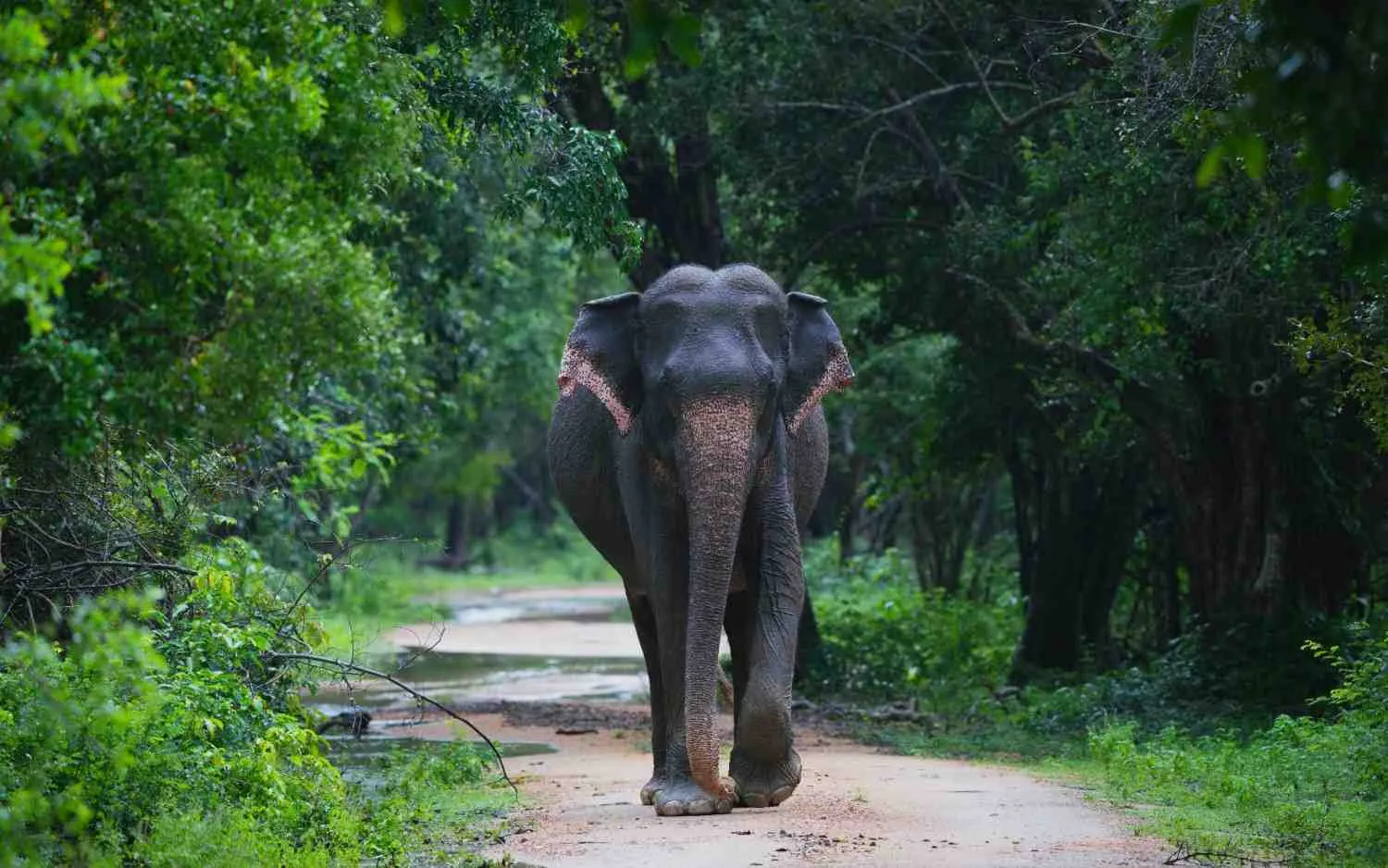
Seeing these creatures in their natural habitat is a humbling experience. You will witness complex herd dynamics, mothers protective of their tiny calves, young bulls play-fighting, and old matriarchs leading the group to water. The sight of these giants bathing, dusting themselves with soil, and stripping tree bark is endlessly fascinating.
Elusive Predators: The Sri Lankan Leopard & Sloth Bear
While Yala is famous for leopards, Udawalawe also hosts a healthy, albeit more elusive, population of Sri Lankan Leopards ($Panthera\ pardus\ kotiya$). Because of the lower tree density, if you do spot a leopard here, it is often resting in the open branches of an old tree or crossing a dry riverbed. Additionally, the shaggy, termite-eating Sloth Bear ($Melursus\ ursinus$) can occasionally be spotted during the fruiting seasons of the Palu and Veera trees.
An Aviary Paradise
For bird lovers, Udawalawe is nothing short of paradise. Over 184 species of birds have been recorded here. Keep your binoculars ready for:
- Raptors: Changeable Hawk-Eagle, Crested Serpent Eagle, and White-bellied Sea Eagle soaring high above.
- Waterbirds: Spot-billed Pelicans, Painted Storks, Spoonbills, and Cormorants gathering at the water's edge.
- Colorful Residents: The vibrant Indian Roller, Plum-headed Parakeets, Blue-tailed Bee-eaters, and the iconic Sri Lanka Junglefowl (the national bird).
Reptiles and Other Mammals
Look closely at the banks of the rivers and the reservoir to spot massive Mugger Crocodiles ($Crocodylus\ palustris$) sunning themselves. You will also encounter herds of Spotted Deer (Chital), Sambar Deer, Wild Boars, Water Buffaloes, and the playful Tufted Gray Langurs swinging through the trees.
5. Best Time to Visit and Optimal Safari Hours
While Udawalawe is a year-round destination, timing your visit can dramatically elevate the quality of your adventure.
The Best Months: The Dry Season (May to September)
The dry season is widely considered the prime window for safari-goers. As smaller waterholes deep in the jungle dry up, animals are forced to emerge from the brush and congregate around the massive Udawalawe Reservoir and primary rivers. Vegetation also thins out, offering unmatched visibility.
Note: The monsoon season (October to January) brings lush green landscapes and stunning dramatic skies, which is perfect for landscape photography, though animals may be more scattered.
The Golden Hours: Choosing Your Safari Slot
The park is open daily from 6:00 AM to 6:00 PM. Animals are most active during the cooler parts of the day.
1. The Morning Safari (6:00 AM – 10:00 AM)
- The Vibe: Crisp air, golden morning light, and mist rising from the grasslands.
- Why it's great: Excellent for birdwatching as birds are highly active, feeding, and singing. Predators are also more likely to be on the move before the tropical heat sets in. You can reserve this directly via the Morning Safari Package.
2. The Afternoon Safari (2:30 PM – 6:00 PM)
- The Vibe: Warm afternoon glow transitioning into a dramatic Sri Lankan sunset.
- Why it's great: This is prime time for elephant viewing. As the heat peaks and begins to subside, large family herds emerge from the shade and make their way to the reservoir for their evening bath and social hour.
3. The Full-Day Safari (6:00 AM – 6:00 PM)
- For hard-core wildlife enthusiasts, a full-day option allows you to pack a picnic lunch and explore the deep, remote northern boundaries of the park where casual tourists rarely venture.
6. Step-by-Step Guide: How to Book Your Udawalawe Wild Safari
To ensure a seamless, stress-free adventure, booking your safari in advance is highly recommended. Follow these simple steps:
[Choose Safari Type] ? [Select Trusted Service Provider] ? [Reserve Jeep Online] ? [Receive Permit/Tickets]
Step 1: Decide on Your Safari Type
- Private Safari: Highly recommended. You rent the entire 4x4 jeep for your group, giving you complete control over your pace, seating comfort, and stopping points.
- Shared Safari: Ideal for solo travelers on a budget. You share the jeep and the cost with other travelers.
Step 2: Select a Reliable, Licensed Safari Operator
Look for operators who employ local, experienced tracker-drivers. Booking with a reliable provider like Walawa Safari ensures you are accompanied by local experts who understand animal behavior, know how to track footprints, and respect the wildlife by maintaining a safe, ethical distance. Avoid ultra-cheap operators who drive recklessly to chase sightings.
Step 3: Secure Your 4x4 Safari Jeep
Standard safari jeeps are rugged, open-top 4x4 vehicles (typically Toyota Hilux, Mitsubishi L200, or Mahindra) fitted with raised, tiered seating. This design ensures that every passenger has a 360-degree, unobstructed view of the wilderness. You can book your custom luxury safari jeep online to guarantee availability for your preferred date.
Step 4: Plan Your Arrival
Most safaris depart directly from your hotel/guesthouse in the Udawalawe area, or you can meet your driver directly at the park's main entrance gate.
7. An Expert's Guide to Safari Costs and Ticket Pricing (2026 Updated)
To avoid unexpected surprises at the gate, it is important to understand how safari pricing works in Sri Lanka. The total cost of a Wild Safari is split into two separate components:
- The Jeep Rental Fee: This is paid directly to your private driver/safari company. It covers the vehicle, fuel, and driver-guide services.
- The Park Entry Ticket: This is paid to the Department of Wildlife Conservation (DWC) at the park gate or online via their official e-portal.
Park Entrance Fee Structure
The entry fee is calculated based on the number of visitors, vehicle entry fees, and government taxes.
- For Foreign Travelers: A single adult ticket is approximately $25 - $30 USD (equivalent in Sri Lankan Rupees, subject to current exchange rates and local taxes). Significant discounts apply for children.
- For Domestic Travelers: Local tickets are heavily subsidized, costing around LKR 300 - 500 per person.
- Group Discounts: If traveling in a group of 4 to 6 people sharing one vehicle, the government service tax per person decreases, making a group ticket much more cost-effective.
Pro Tip: Always carry cash (Sri Lankan Rupees) if you plan to buy tickets at the gate counter, as card machines can occasionally lose connection in remote jungle areas. Alternatively, ask your booking coordinator to purchase your e-tickets in advance.
8. The Elephant Transit Home (ETH): A Must-Visit Ethical Stopover
No wild itinerary to Udawalawe is complete without visiting the Elephant Transit Home (ETH), located just 5 kilometers from the main park entrance.
Unlike controversial commercial elephant orphanages elsewhere, the Udawalawe ETH is a highly respected, globally recognized ethical conservation project managed by the Department of Wildlife Conservation.
       [Injured/Orphaned Calf Rescued from the Wild]
                            ?
                            ?
           [Nurtured & Rehabilitated at the ETH]
                            ?
                            ?
    [Gradual Reintroduction to Udawalawe National Park]
The Mission of ETH
The primary objective of the ETH is to rescue orphaned, injured, or abandoned baby elephants from jungles across Sri Lanka, rehabilitate them, and eventually release them back into the wild plains of Udawalawe National Park once they are mature and strong enough to survive independently. Human contact is strictly minimized to prevent the calves from bonding with humans, ensuring they retain their wild instincts.
The Feeding Sessions
While visitors cannot touch or ride the elephants, you can watch them from a raised viewing platform during their scheduled milk-feeding sessions. Watching dozens of excited baby elephants run, jostle, and play-fight as they rush to get their warm milk is an incredibly heartwarming experience.
- Feeding Times: 9:00 AM, 12:00 PM, 3:00 PM, and 6:00 PM daily.
- Best Strategy: Book an afternoon Wild Safari with Walawa Safari starting at 2:30 PM, and visit the ETH right before or immediately after your safari to maximize your day trip!
9. Pro Photography Tips for Your Wild Safari
The open savannas of Udawalawe offer some of the best wildlife photography opportunities in Asia. Use these expert tips to capture stunning, professional-grade images:
- Lens Selection: While a standard zoom lens ($18-135\text{mm}$) is great for capturing landscape shots of herds against the mountains, a telephoto lens of at least $300\text{mm}$ to $600\text{mm}$ is essential for capturing close-ups of birds, leopard expressions, and far-off elephant eyes.
- Stabilization: Safari jeeps can vibrate heavily when the engine is running, and the terrain is bumpy. Bring a beanbag or a monopod to rest your camera on the jeep frame. Tripods are generally too bulky and difficult to maneuver in a moving jeep.
- Mind the Dust: Because of the dry, sandy tracks, fine dust will rise into the air. Keep your camera gear protected inside a zip bag when not in use, and avoid changing lenses while driving on the dusty trails.
- Expose for the Highlights: The intense midday tropical sun can easily wash out your photos. Shoot in raw format and slightly underexpose to preserve the rich, golden textures of the elephant skin and the vibrant feathers of the birds.
10. Responsible Travel: Crucial Safari Etiquette & Rules
As travelers, it is our collective responsibility to preserve this delicate ecosystem for generations to come. When embarking on your Wild Safari, strictly adhere to the following code of conduct:
- Keep Noise to a Minimum: Speak in hushed whispers. Loud music, shouting, or clapping can severely stress the animals, causing mothers to become aggressive or run away.
- No Plastic or Littering: Pack out everything you pack in. Wind can easily blow loose plastic wrappers or bottles out of the open-air jeep, creating deadly choking hazards for deer and elephants.
- Do Not Feed the Animals: Feeding wild animals alters their natural foraging behaviors and makes them dependent on humans, often leading to tragic human-elephant conflicts.
- Keep Hands and Feet Inside the Vehicle: Never alight from the jeep unless you are at a designated, secure rest area (such as the picturesque Walawe River bridge). These are truly wild animals, and their behavior can be unpredictable.
- Wear Earthy, Neutral Tones: Dress in khaki, beige, olive green, or grey clothing. Bright fluorescent colors (like hot pink or neon yellow) stand out sharply and can startle sensitive wildlife.
11. Frequently Asked Questions (FAQs)
Q1: Is a wild safari in Udawalawe safe for young children?
Answer: Yes, absolutely! Children find the up-close encounters with elephants and baby monkeys highly engaging. Just ensure they remain seated while the vehicle is in motion and are prepared for a bumpy, dusty ride. Bring plenty of water, snacks, and sun protection.
Q2: Can I see leopards in Udawalawe National Park?
Answer: While leopards do live in Udawalawe, they are much harder to spot here than in Yala. Consider a leopard sighting in Udawalawe an incredible bonus rather than a guarantee. Focus on enjoying the elephants, birds, and peaceful landscapes!
Q3: What should I pack for my safari?
Answer: We highly recommend packing:
- A high-SPF sunscreen and a wide-brimmed sun hat.
- High-quality sunglasses to protect your eyes from the sun and dust.
- Insect repellent (especially for early morning and evening safaris).
- A lightweight scarf or face mask to shield your face from dust.
- Binoculars and your preferred camera gear.
Q4: How long does a typical safari last?
Answer: A standard half-day safari takes approximately 3 to 4 hours, which is plenty of time to explore the park's major tracks and see multiple elephant herds. Full-day safaris last around 10 to 12 hours and are tailored for birdwatchers and photographers.
Q5: Is there a restroom inside the national park?
Answer: There are no modern public restrooms along the general safari tracks to preserve the wild nature of the park. However, there is a designated scenic pitstop area by the river where basic restroom facilities are available. Ask your driver to stop there if needed.
12. Conclusion: Ready to Book Your Adventure?
A Wild Safari in Udawalawe is more than just a sightseeing tour; it is a profound journey into one of the world's most successful elephant sanctuaries. Watching these magnificent, highly emotional creatures interact freely in their natural home is a humbling experience that will leave an indelible mark on your soul.
By choosing a reputable safari operator, respecting the environment, and taking the time to understand the local conservation efforts, you contribute directly to the survival of these endangered species and support the local communities of Sri Lanka.
Don't leave your Sri Lankan adventure to chance. Contact Walawa Safari today, book your safari jeep, camera, and get ready to step into a real-life nature documentary!